

- Docker — runs the robot’s software stack in a container.
- uv — runs the physics world natively on your machine
(
./innate-sim setupoffers to install this one for you).
Install the prerequisites
- macOS
- Linux (Ubuntu / Debian / Raspberry Pi OS)
- Windows (WSL2)
Start the simulator
1
Clone innate-os
2
Run setup once
uv if it is
missing), then asks which brain — the robot’s AI agent — to run. The
agent is the open-source
innate-cloud-agent;
the choice is only about where it runs:- Local brain (Gemini) — the default. Clones
innate-cloud-agentand runs it on your machine against a Gemini API key. Everything works except voice: the web app’s speak bar is disabled without a service key. - Hosted Innate brain — the same agent, run on Innate’s servers with your Innate service key (it ships with a MARS robot). The full experience, including voice — the robot speaks.
- None — no agent; you can still drive, navigate, and trigger skills manually.
./innate-sim setup anytime to switch.3
Bring it up
4
Open the web app
Go to https://localhost and accept the
self-signed certificate. This is the robot’s own web app — the same one
a physical MARS serves.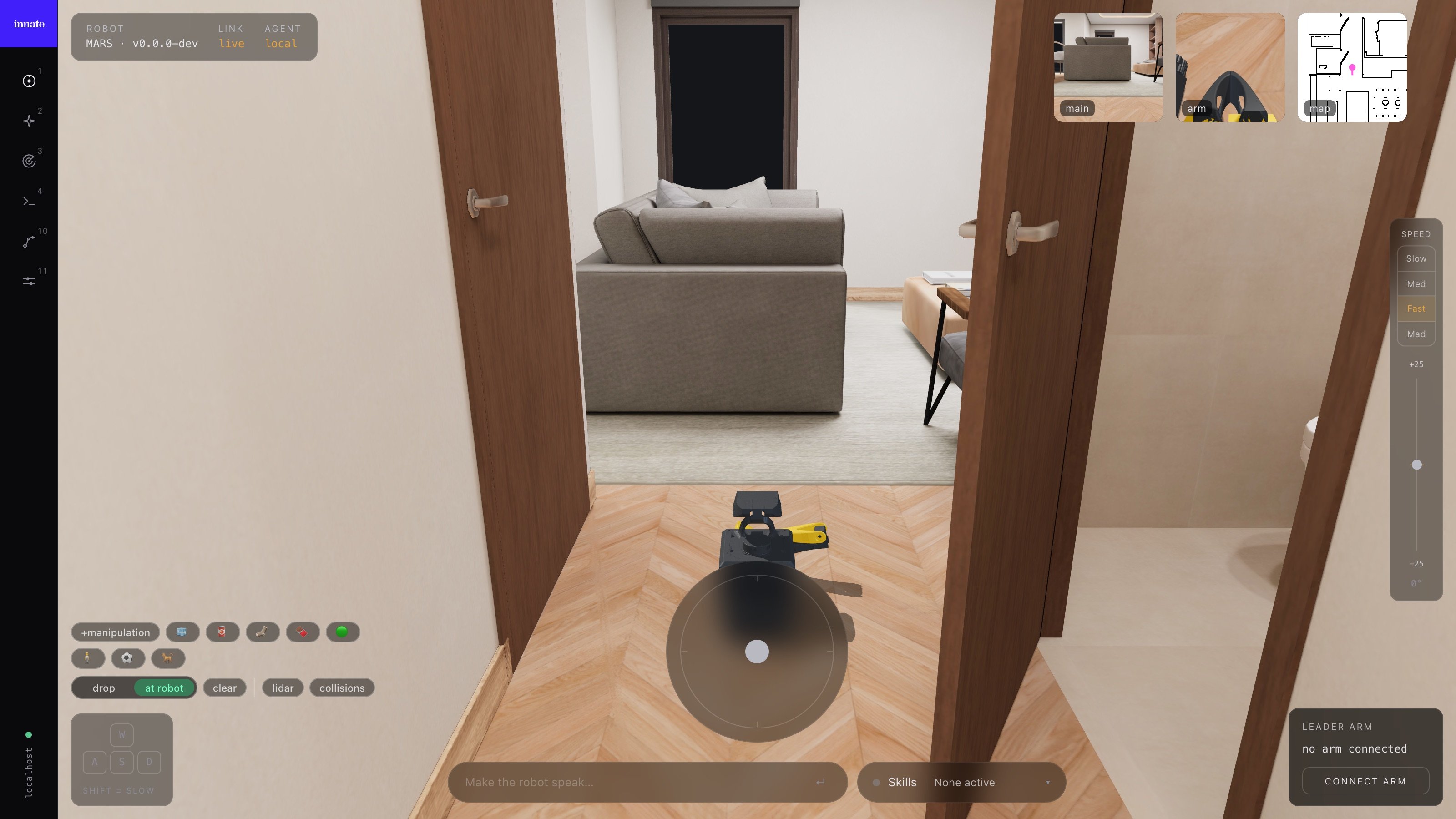
Everyday commands
If something goes wrong
Every error the launcher prints is written to tell you exactly what to do next — missing packages come with the install command, a wedged Docker names itself, and the startup checks end with a health panel that includes the world server and its measured render speed. If you get stuck anyway, ask on Discord — setup reports from new machines are how the rough edges get fixed.Next step
Building with the Simulator
Write your first skill, hand it to an agent, and iterate against the
simulated MARS.